What are the characteristics of tower kettle reboiler
Information summary:The tower kettle reboiler is the core heat exchange equipment that is installed at the bottom or side of the distillation tower. Its function is to heat and vaporize the liquid phase material in the tower kettle, and the generated gas phase flows back into the tower to provide upward steam for distillation separation. Its design and operation need to be adapted to the requirements of gas-liquid ba
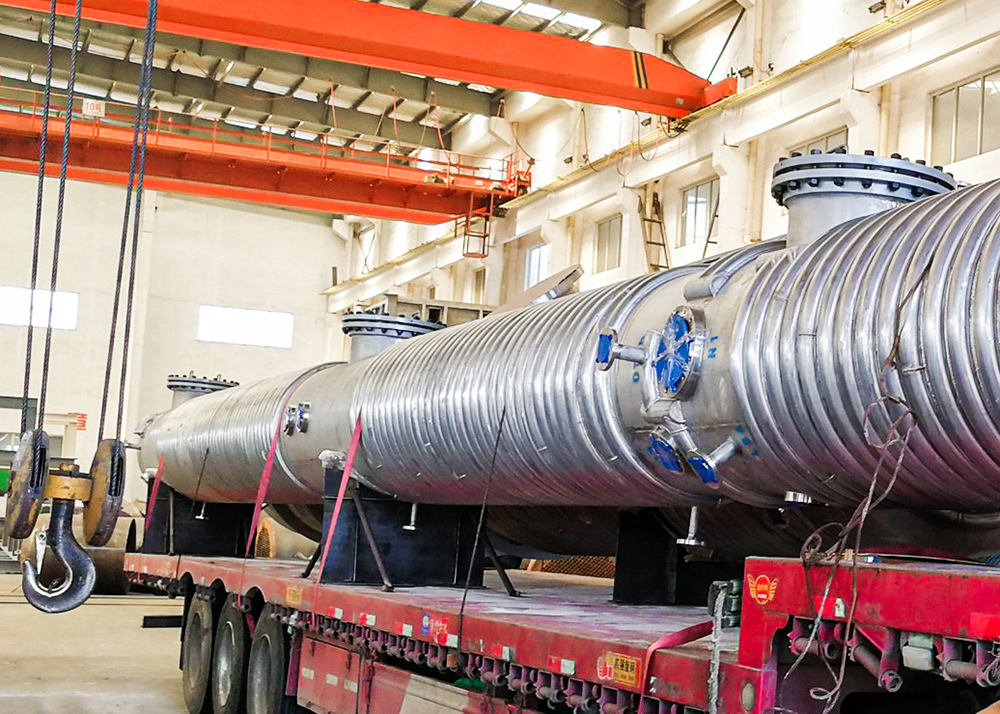
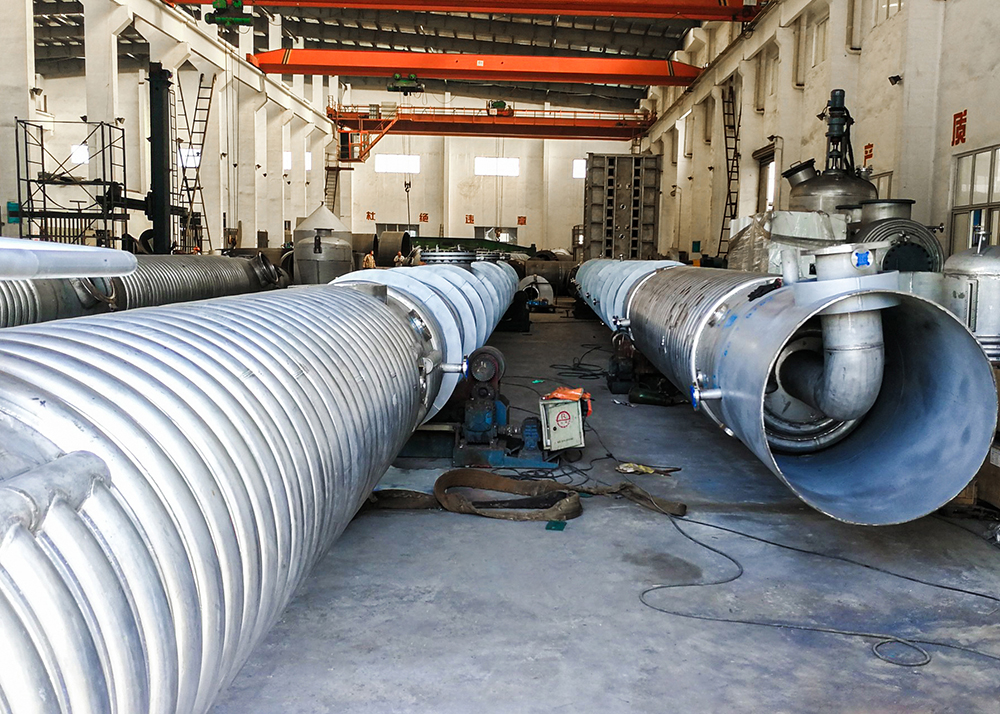
The tower kettle reboiler is the core heat exchange equipment that is installed at the bottom or side of the distillation tower. Its function is to heat and vaporize the liquid phase material in the tower kettle, and the generated gas phase flows back into the tower to provide upward steam for distillation separation. Its design and operation need to be adapted to the requirements of gas-liquid balance, stable heat load, anti scaling and anti-corrosion of the distillation process. The core features are as follows:
1、 Structural features: Suitable for tower kettle working conditions, efficient heat exchange and easy maintenance
1. Common structural forms and targeted design
Horizontal shell and tube reboiler (most widely used)
The shell and tube bundle are arranged horizontally, with the shell side passing through the tower kettle liquid phase material and the tube side passing through the heating medium (steam, thermal oil, etc.); When the material flows in the shell side, turbulence is easily formed, the heat transfer coefficient is high, and the vaporization effect is uniform.
Built in baffle/baffle plate not only enhances turbulence disturbance, but also prevents short circuit of shell side materials, while supporting the tube bundle and reducing vibration wear.
Adopting a detachable tube bundle structure facilitates the cleaning of scaling and coking materials that are prone to occur in the tower kettle, reducing maintenance costs.
2. Vertical thermosiphon reboiler
Relying on the thermosiphon effect to achieve material circulation: After the liquid in the tower kettle enters the reboiler for heating and vaporization, the density of the gas-liquid mixture decreases, forming a density difference with the non vaporized liquid in the tower kettle, automatically completing the cycle of "tower kettle → reboiler → tower" without the need for additional circulation pumps, energy-saving and stable operation.
The tube bundle is arranged vertically, with the heating medium flowing through the tube side and the material flowing through the shell side. The gas-liquid separation space is sufficient, and the vaporized gas phase can be smoothly returned to the tower to avoid the influence of liquid droplets on the distillation effect.
3. Pot type reboiler (with evaporation space)
An evaporation chamber is added to the lower part of the shell, where the heated material undergoes gas-liquid separation. The gas phase rises into the tower and the liquid phase returns to the tower kettle; Suitable for heat sensitive materials or materials prone to foaming, it can avoid material decomposition caused by excessive heating.
Strong material adaptability
Select materials based on the corrosiveness, high temperature and high pressure characteristics of tower kettle materials:
Ordinary materials (such as petroleum fractions): Carbon steel and 20G boiler steel are selected, which have low cost and temperature and pressure resistance;
Corrosive materials (such as acidic and alkaline solutions, chlorine containing media): stainless steel (304/316), titanium alloy, and Hastelloy alloy are selected;
Materials prone to scaling (such as high viscosity oils): The surface of the tube bundle should be polished or coated with anti scaling coatings to reduce the adhesion of dirt.
2、 Operating characteristics: Stable heat load, suitable for distillation process requirements
The heating capacity of the controllable heat load reboiler directly determines the amount of rising steam in the distillation tower, which in turn affects the separation efficiency and product purity of the tower. When designing, it is necessary to match the theoretical number of trays and reflux ratio of the tower, control the heat load by adjusting the flow/pressure of the heating medium, and ensure stable gas-liquid balance inside the tower.
Good gas-liquid separation effect. The outlet of the reboiler needs to have sufficient gas-liquid separation capacity to avoid liquid phase entrainment into the tower, which can cause an imbalance in the gas-liquid ratio in the distillation section and reduce separation accuracy. Especially for thermosiphon and kettle reboiler, the structure design reserves space for gas-liquid separation to ensure the "dryness" of the reflux gas phase.
Strong adaptability to changing working conditions. The heating load can be flexibly adjusted according to changes in the feed quantity and composition of the distillation tower
When the feed components become heavier, increasing the heating amount can improve the vaporization rate;
When the liquid level of the tower kettle fluctuates, the heating medium flow rate is adjusted through the linkage of the liquid level control system to prevent dry burning or tower flooding.
3、 Process features: anti scaling, anti-corrosion, and extended service life
1. Anti scaling design
Tower kettle materials (especially high boiling point and high viscosity materials) are prone to scaling on the pipe wall during heating, which reduces heat transfer efficiency. The reboiler usually adopts the following measures:
Increase the flow rate of shell side materials (turbulent state) to reduce fouling deposition;
Using threaded tubes, corrugated tubes, and other reinforcement heat transfer tube bundles to increase fluid disturbance while reducing fouling thermal resistance;
Reserved online cleaning interface, which can achieve online descaling without stopping the machine.
2. Excellent temperature and pressure resistance performance
The operating pressure of the distillation tower kettle includes vacuum, atmospheric pressure, and high pressure (such as vacuum distillation and pressurized distillation in petroleum refining), and the reboiler needs to be designed with corresponding pressure resistant structures:
Vacuum working condition: thickened shell, equipped with anti collapse device to avoid negative pressure deformation;
High pressure working condition: adopts flange sealing structure, and the welding between the tube bundle and the tube plate adopts expansion welding combined process to prevent leakage.
For materials that are prone to decomposition and polymerization when heated (such as chemical products), the reboiler can use low-temperature differential heating (the temperature difference between the heating medium and the material is controlled at 10-20 ℃), or use a falling film reboiler. The material forms a thin film on the pipe wall, is uniformly heated, and has a short residence time, reducing the risk of decomposition.





 Wechat number:18626143580



 Service Hotline

 Hotline:0512-52093708
 E-mail:yutezjl@163.com
 Address:No. 101, Taojia Bridge, Dahe Village, Shanghu Town, Changshu City, Suzhou City, Jiangsu Province
 Add wechat
 Contact us
 Telephone